7 Tactical Strategies to Fill Empty Tables and Explode Restaurant Sales on Slow Days
Convert low-traffic Mondays and Tuesdays into profit centers by leveraging corporate catering, high-margin slow-day specials, and automated digital marketing. Successful operators use direct-ordering technology and local event programming to eliminate the 30% commission drain from third-party apps.
Capturing the Corporate Catering Gold Mine
Catering is often treated as a secondary thought, an occasional bonus rather than a core revenue driver. This is a massive operational oversight. The math on catering is clear: food sold in bulk orders is twice as profitable as the same food sold to individual walk-ins. The reason lies in labor efficiency. Preparing five large trays of pasta or fifty boxed lunches is significantly less labor-intensive than managing fifty individual tickets hitting the line at different times. You remove the friction of the “order-fire-plate” cycle, allowing your prep team to work in high-volume batches during off-peak hours.
The strategic window for catering aligns perfectly with the typical restaurant slump. While your dining room sits empty on Monday and Tuesday, corporate offices are in peak ordering mode. Data suggests that 65% of all catering orders are corporate-based, and their busiest procurement days are precisely when your front-of-house staff is standing around. To win this business, you cannot rely on third-party aggregators like EzCater, which syphon 30% or more of your gross revenue and strip you of customer data. You must build a direct-to-consumer catering channel.
Building this channel requires two pillars: specialized technology and aggressive boots-on-the-ground promotion. Your website must support “per person” ordering or headcount-based quantities, rather than just a standard menu. Integrating with third-party delivery networks for the fulfillment side is critical so you don’t have to manage a dedicated driver fleet. On the promotion side, send your managers into local office parks during slow hours. Don’t just drop off a flyer; bring food. Target the office administrators—the gatekeepers who actually make the ordering decisions. Incentivize them with loyalty points and free meals. When they see that ordering directly from your digital portal is easier and more rewarding than using a third-party app, you secure a recurring, high-margin revenue stream that keeps your kitchen busy on a dead Tuesday.
Engineering High-Margin Slow Day Specials
The “Slow Day Special” is a classic industry move, but most independent owners execute it poorly. They offer deep discounts on labor-intensive items, effectively trading margin for foot traffic and ending up with a busy but unprofitable night. The key is to select items that are famously high-margin and low-food-cost. Tacos, pizza, and pasta are the gold standard. For example, a “Taco Tuesday” promotion offering 20% off can still yield massive margins because the raw ingredient cost for a corn tortilla and a few ounces of protein is remarkably low.
Successful operators use these specials to create a sense of “relevant scarcity.” By naming the day—Wine Wednesday, Mozzarella Monday, or Taco Tuesday—you create a mental association for the guest. It gives them a specific reason to choose your establishment over a competitor on a night they might otherwise stay home. This isn’t just about a discount; it’s about community habit formation. You want your brand to be the automatic answer when a local family asks, “Where should we eat on Tuesday?”
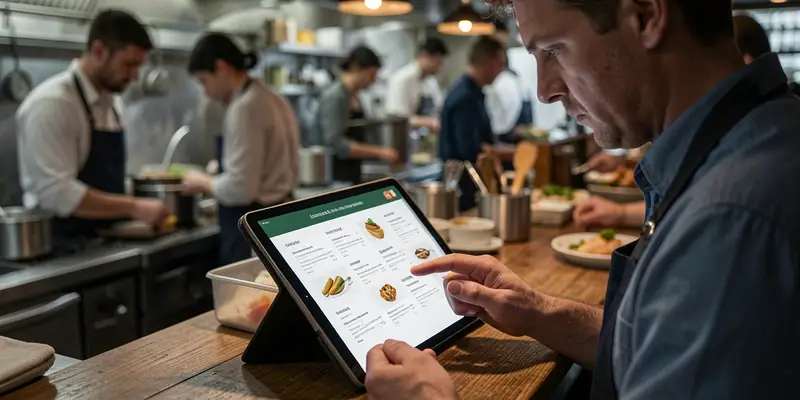
To make this work without reprinting paper menus every week, you need a digital infrastructure that allows for real-time updates. Using an AI-powered platform to digitize your physical menu photos into a web-based format allows you to toggle “Tuesday Only” pricing or hide out-of-stock items instantly. This prevents the “menu apology” where a server has to explain that a printed special is no longer available or that the price has changed. For breweries or taprooms, this is non-negotiable for managing rotating kegs or seasonal pours. When the special is live, it should be the first thing a guest sees when they scan the QR code at the table.
The Technical Infrastructure of Automated Marketing
Manual marketing is the first thing to fall off the plate when a restaurant gets busy. No operator has the capacity to manually draft and send emails every Tuesday afternoon while simultaneously managing a kitchen line. Automation is the only way to ensure consistency. By setting your marketing on autopilot, you remind your regulars about your slow-day specials exactly when they are making their dining decisions.
An automated email blast on a Tuesday afternoon should do more than just announce a discount. It should show the food. High-quality visuals of your seven different taco varieties or your “seasonal roast” drive cravings in a way that plain text cannot. More importantly, these emails should push the guest toward your direct ordering link. Remind them that they save money—and you save on third-party fees—by ordering through your site rather than DoorDash or UberEats. This transparency builds rapport and increases the average order value.
The data shows that this simple automated reminder can increase sales by hundreds of dollars every week. It works because it targets the “low-hanging fruit”—people who have already eaten at your restaurant and enjoyed the experience. They don’t need to be convinced your food is good; they just need to be reminded that it exists and that today is the day they can get a specific deal. This level of precision is why digital menus and integrated marketing databases are replacing the old “post and pray” social media strategy.
Leveraging Mobile App Ecosystems for Instant Reorders
While email is a staple, mobile app push notifications are the heavyweight champions of engagement. Statistics indicate that 50% of push notifications are viewed within ten minutes of being sent. They boast a click-through rate five times higher than traditional email. For a restaurant, this means you can hit a customer’s pocket exactly at 4:30 PM when they are deciding what to do for dinner.
The real power of a dedicated app—or a high-end mobile web menu—is the “one-button reorder” functionality. Friction is the enemy of sales. If a customer has to re-enter their credit card, address, and specific burger preferences every time, they might drift toward a more convenient third-party app. If they can open your notification, see their favorite “Combo deal,” and hit “Reorder” in thirty seconds, you have won. Their food is being prepped before they’ve even left the office.
This ecosystem also allows you to store guest preferences and past order history. When a regular launches your digital menu to check the “fresh bake schedule” or the “daily pastry rotation,” you can serve them personalized suggestions based on what they like. This level of technical sophistication was once reserved for global chains, but current AI menu tools have brought these capabilities to independent small businesses. You can now manage your web link, app presence, and QR codes from a single dashboard, ensuring that your slow-day messaging is consistent across every digital touchpoint.
Text Message Direct Response for Local Dining
SMS marketing is often overlooked because operators fear being intrusive. However, when done correctly, it is the most direct line to your most loyal fans. A text message has a nearly 100% open rate. If you have a list of regulars who have opted in, a simple text offering “Free delivery on orders over $35 today only” can drive thousands of dollars in incremental sales on a day that would otherwise be dead.
The strategy for SMS must be built on “Limited Time Offers” (LTOs) and minimum spends. You don’t want to send a text for a $5 discount; you want to send a text that drives a high-value behavior. By building a delivery minimum into your text special, you ensure that every order generated is profitable after factoring in the cost of the driver and the food. This is a surgical strike on your local market.
For a diner or a fast-food outlet, this is particularly effective for “meal upgrades” or “quick-pick menus.” If the kitchen prep time is low on a Monday, use SMS to push items that your staff can fly through. This keeps your labor cost percentage in check by ensuring your clocked-in staff is actually producing revenue. When you integrate this with a digital menu that allows for instant updates, you can even run “Flash Specials” to move inventory that might otherwise expire before the weekend rush.
Atmospheric Engineering: Live Music as a Customer Magnet
Beyond digital tactics, the physical atmosphere of your restaurant can be a major draw on slow days. Live music, such as “Mariachi Mondays” for a Mexican concept or an acoustic set for a wine bar, transforms the dining room from a quiet, awkward space into a “vibrant experience.” This is especially critical for restaurants with a large footprint that can feel “empty” even with a few tables filled.
The operational beauty of this strategy is the “win-win” partnership with local talent. In many cities, talented musicians are looking for a stage and are willing to perform for tips and the exposure of your dining room. This means your overhead for the event is zero, but the “curb appeal” is massive. Passersby hear the music, see the crowd through the window, and perceive the restaurant as a “hot spot” even on a Monday.
To maximize the ROI, you must document and promote these events. Post clips to social media and use your automated email system to remind guests that “Mariachi Monday” is coming up. This turns a one-time visitor into a regular who associates your brand with entertainment. When they arrive, ensure your QR menus are prominently displayed so they can order “seasonal pours” or “tap list” items without needing to interrupt their listening experience to flag down a busy server.
Community Integration via Game Night Programming
If live music is about atmosphere, game nights are about social engagement and community building. Events like Bingo or Trivia nights appeal to a specific demographic looking for something to do on an otherwise “dead” night. Unlike a standard dinner, a game night encourages guests to stay longer, which inevitably leads to higher beverage sales and multiple rounds of “Combo deals” or “Quick-pick” appetizers.
Creating a custom Bingo deck or trivia theme tailored to your local community creates a sense of belonging. It’s not just a meal; it’s a social club. This strategy has been proven to build robust Tuesday business for bars and grills that previously struggled to break even during the early week. There are numerous digital tools to create themed cards, allowing you to rotate themes—90s Pop Culture, Local History, or Sports—to keep the experience fresh.
The key to success here is consistency. A game night shouldn’t be a one-off event; it should be a weekly staple. Use your digital menu platform to feature “Game Night Specials” that are only visible during the event hours. With a Pro-tier digital menu management system ($9.99/month or $49.99/year), you can easily update these items and prices in real-time, ensuring your “Rotating kegs” or “Meal upgrades” are always accurately represented to your captive audience.
Digitizing the Experience: Real-Time Menu Management
The common thread across all these strategies is the need for agility. The old-school method of printing thousands of paper menus and hoping the prices stay stable is dead. To compete in a modern market, you must be able to scan a physical menu, digitize it using AI, and publish it online in seconds. This allows you to react to market changes, adjust for kitchen prep times, and launch slow-day specials with zero friction.
A digital menu is not just a PDF on a website; it is a live, interactive tool. For breweries, it means the “tap list” is never out of date. For bakeries, the “daily pastry rotation” can be updated as soon as an item sells out. This level of precision improves the guest experience and removes the “mental load” from your staff. They no longer have to remember what’s off-menu or what the “Tuesday-only” price is; the QR code does the work for them.
By utilizing an advanced platform to manage your digital presence, you get insights and analytics that paper menus simply can’t provide. You can see which specials are actually being viewed and which items people are clicking on. This data allows you to refine your slow-day strategies, doubling down on what works and cutting what doesn’t. In an industry with razor-thin margins, this technical edge is the difference between a restaurant that struggles on Mondays and one that dominates them.
FAQ: Technical Challenges in Slow-Day Operations
How do you handle the labor spike if a slow-day special becomes too popular? The key is “Menu Engineering.” Select items for your specials that are “low-touch” or can be prepped in high volume before the shift starts. If you run a Taco Tuesday, ensure your proteins are braised and your salsas are batched so the line only has to assemble, not cook to order.
What is the food cost threshold for a 20% discount to remain profitable? You should only discount items with a raw food cost of 20-25% or lower. This ensures that even after a 20% discount, you are maintaining a healthy gross margin. Avoid discounting high-cost items like steak or premium seafood unless they are part of a high-margin “Combo deal.”
How can I manage “Rotating kegs” or “Seasonal pours” without confusing guests? Use a digital menu platform that allows for real-time, live updates. When a keg blows, your staff should be able to hide that item from the digital menu instantly via their phone or tablet. This prevents guests from ordering out-of-stock items and improves overall service speed.
Is it worth paying for a Pro digital menu tier for a small cafeteria or food truck? Yes. For $9.99/month, the ability to generate instant QR codes and update prices in real-time saves more in printing costs and “lost-sale” frustration than the subscription cost. For high-volume operations, the $49.99/year plan is essentially a rounding error compared to the ROI of automated marketing and real-time menu management.
Frequently Asked Questions
How do you handle the labor spike if a slow-day special becomes too popular?
The key is Menu Engineering. Select items for your specials that are low-touch or can be prepped in high volume before the shift starts. If you run a Taco Tuesday, ensure your proteins are braised and your salsas are batched so the line only has to assemble, not cook to order.
What is the food cost threshold for a 20% discount to remain profitable?
You should only discount items with a raw food cost of 20-25% or lower. This ensures that even after a 20% discount, you are maintaining a healthy gross margin. Avoid discounting high-cost items like steak or premium seafood unless they are part of a high-margin Combo deal.
How can I manage Rotating kegs or Seasonal pours without confusing guests?
Use a digital menu platform that allows for real-time, live updates. When a keg blows, your staff should be able to hide that item from the digital menu instantly via their phone or tablet. This prevents guests from ordering out-of-stock items and improves overall service speed.