The Independent Operator’s Survival Guide: Navigating the Global Shift in Restaurant Value and Labor
Independent operators must transition from price-based value to experience-based worth while managing a market where 75% of transactions occur off-premise. Success requires balancing back-of-house automation with high-touch, flexible front-of-house service to combat the global labor crisis.
The Death of ‘Cheap’ and the Redefinition of Consumer Value
For decades, the independent sector chased the tail of the QSR giants, trying to compete on price points that were never sustainable for a scratch kitchen. That era is dead. Today’s consumer—specifically the Gen Z and Millennial cohorts—has fundamentally recalibrated what “value” means. They are no longer looking for the lowest dollar amount on the check; they are looking for a return on their time and an alignment with their ethics. If a guest spends forty-five minutes in your dining room, they view that time as an investment. If the meat isn’t responsibly sourced or the staff looks miserable, the ROI for that guest hits zero, regardless of the price.
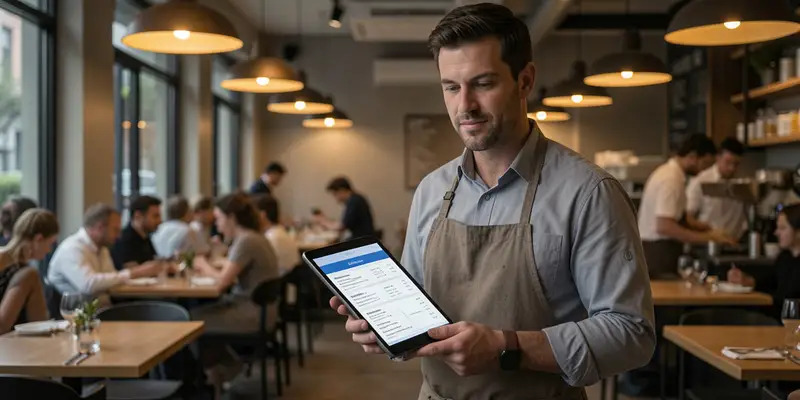
This shift is a tactical advantage for the independent operator who can tell a story. When you manage a bakery or a craft brewery, your “value” is the daily pastry rotation or the seasonal pour that can’t be found in a corporate chain. However, this discerning nature comes with a price: hyper-sensitivity to transparency. If you change your prices to reflect your rising labor costs, you cannot hide behind a black-marker-edited physical menu. You need tools like QR Menu Maker to update prices and item availability in real-time. For $9.99 a month, you maintain the professional sheen that these discerning customers demand, ensuring that “value” isn’t eroded by the friction of outdated information.
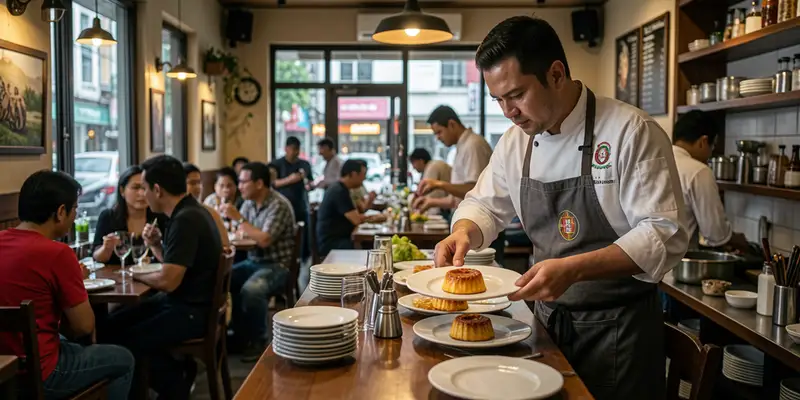
The operational reality is that you are now catering to a split demographic. You have Boomers who crave the traditional “third space” socialization and Gen Z who want a friction-less, Instagrammable experience. The middle ground is flexibility. You must offer a high-design physical environment for those who stay, while simultaneously perfecting the “invisible” service for those who just want to grab their order and leave. Value is now synonymous with relevance. If your menu doesn’t reflect the current “fresh bake schedule” or “seasonal roast,” you aren’t just out of date—you’re out of the running.
Mastering the 75% Off-Premise Dominance
The most staggering metric in the current industry is that 75% of restaurant transactions in the U.S. are now for off-premise consumption. This includes drive-thru, third-party delivery, and curbside pickup. For a traditional full-service operator, this is a gut punch. It means your dining room, which you pay a premium for in rent and construction, is only serving 25% of your customer base. The friction here is intense: how do you maintain your brand identity when your food is being shoved into a cardboard box and driven three miles away by a stranger?
To survive this, your digital presence must be as polished as your physical silverware. The digital menu is no longer a secondary thought; it is your primary storefront. Using AI-powered menu scanning to digitize your physical offerings into shareable web links is the baseline. When 75% of your revenue flows through a screen, that screen must be optimized for speed. This is where the “Fast Food and Dark Kitchen” workflow becomes relevant for everyone. You need quick-pick menus and combo deals that are easy to navigate on a mobile device.
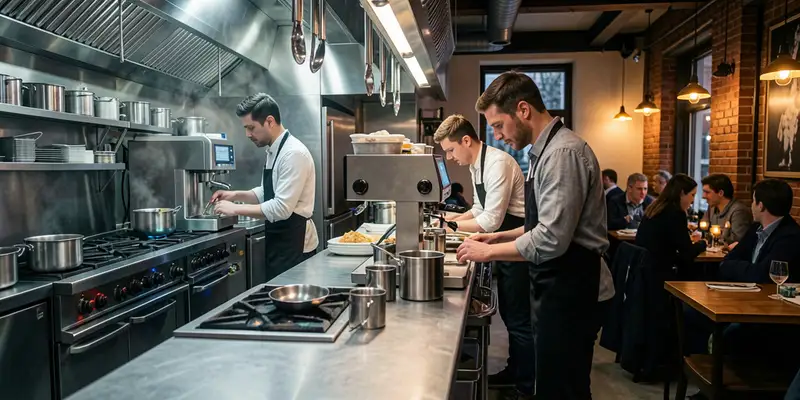
Operationally, this 75% shift requires a total rethink of the kitchen line. If you are a high-volume diner or a full-service Italian spot, your “to-go” station can no longer be a cramped corner of the bar. It needs dedicated prep space and a streamlined flow that doesn’t collide with your in-house servers. The insights and analytics provided by a Pro-tier digital menu platform become vital here. You need to see which items are being clicked but not ordered, and which “meal upgrades” are driving your off-premise margins. Without this data, you are flying blind in the most competitive segment of the market.
The Shrinking Footprint: Socialization vs. Real Estate Reality
Construction costs and occupancy rates are at an all-time high, forcing a trend toward smaller, more efficient restaurant footprints. We are moving away from the sprawling 150-seat dining rooms of the past toward “tight” designs that prioritize every square inch. The challenge is that as we shrink the space, we risk losing the very thing that makes hospitality special: the sense of community. The “loneliness epidemic” is a real market driver; people crave socialization, but operators can’t afford to let them “camp out” on a $2,000-a-month lease space for three hours over a single coffee.
The solution is the “Smart Space” design. This means incorporating bars for single diners and shared long tables that maximize seat density without making guests feel like they are in a cafeteria. It also means the kitchen is getting smaller. Chefs are being asked to do more with less, which necessitates smarter equipment and better organized digital workflows. If you can’t fit a massive physical menu board, a QR code generated for instant menu access becomes a literal space-saver.
We are seeing a return to the “third space” concept, led by brands like Starbucks, who are re-introducing seating after realizing that a “pickup only” model kills the brand’s soul. For the independent, this means you must be a “hospitality zone.” You are not just selling food; you are selling a place to belong. Whether it’s a “gathering table” event for strangers or a “coffee flight” at a bakery, you must create reasons for people to physically enter your space, even as the market pushes them toward the drive-thru.
Solving the Global Labor Crisis through Human Centricity
The restaurant labor crisis is not a temporary blip; it is an evergreen, global structural shift. The old model—low pay, grueling hours, and zero work-life balance—is officially extinct. To retain staff in 2026, you have to treat them as human capital rather than a commodity. This involves “human sustainability.” Some forward-thinking operators are even training their staff for careers outside of hospitality, knowing that if they invest in the person, the person will invest in the shift.
However, empathy doesn’t pay the bills alone. You must also eliminate the “lousy” jobs that drive people away. Automating the dish pit with advanced wear-washing systems or using AI to handle mundane tasks is a godsend for retention. When you reduce the “grunt work,” your team can focus on the “hospitality” work—the parts of the job that actually provide professional satisfaction.
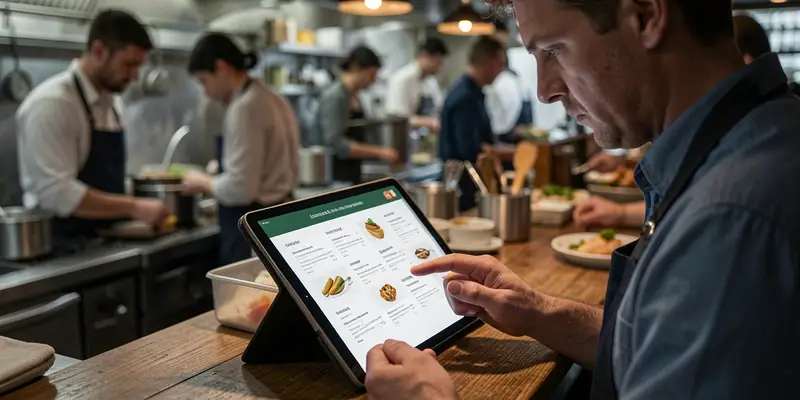
Furthermore, you have to bridge the gap between your staff’s generation and your operational needs. Your Gen Z staff are digital natives; they shouldn’t be struggling with a clunky, paper-based pricing system. Giving them a real-time menu management tool allows them to update a “rotating keg” or a “daily pastry” list in seconds. This reduces their stress during a rush and makes them more effective at their jobs. When the staff feels empowered by their tools rather than hindered by them, retention rates climb.
Back-of-House Automation: Why Your Kitchen Needs AI
The shortage of skilled culinary labor has made the traditional “intuition-based” kitchen a liability. We are seeing a massive influx of smart equipment—ovens with computer vision that recognize a chicken breast and adjust the temperature automatically. This isn’t about replacing chefs; it’s about “de-skilling” the technical execution so that your limited staff can focus on flavor and presentation. If you used to need eight people to run a line, you now need to be able to do it with five or six.
AI is making its way into the kitchen department through predictive ordering and waste management. In the EU, the average consumer wastes 15kg of food annually, while in Brazil, that number jumps to 94kg. For a restaurant, that waste is pure profit down the drain. AI tools that help you track what is actually selling versus what is being prepped are essential. By using a digital menu’s analytics dashboard, you can see exactly which items are duds and cut them before they rot in your walk-in.
This technical shift also applies to training. Using ovens with “picture-based” interfaces instead of complex manuals allows you to onboard new hires faster. In a world where staff turnover is high, the “time to productivity” for a new employee is a critical metric. Automation in the back-of-house allows the front-of-house to remain human. You automate the “chicken button” so the server has the mental energy to explain the “seasonal roast” to a curious guest.
The QR Code Conflict: Balancing Efficiency with Hospitality
There is a tension between digital efficiency and the “human touch.” Many guests, and even some consultants, harbor a deep dislike for QR code menus, viewing them as a barrier to the dining experience. They spend all day in front of screens; the last thing they want to do at dinner is stare at another one. However, the operational benefits—real-time updates, PDF to web conversion, and lower printing costs—are too significant to ignore.
The middle ground is “Accommodating Efficiency.” Don’t force the technology; offer it as a tool. A high-end restaurant can provide a beautiful, leather-bound menu for the “read” but have a QR code available for the “pay.” This allows the guest to engage with the staff for the “special of the day” but skip the fifteen-minute wait for the check. It’s about reading the customer.
Some operators are even using “stoplight cards” on tables: Green for “tell me everything,” Yellow for “medium attention,” and Red for “leave us alone.” This allows the server to tailor their hospitality to the guest’s specific mood. When paired with a customizable digital menu that matches your brand’s color palette and theme, the technology feels like a part of the service rather than an interruption of it.
Sustainability as a Financial Survival Metric
Sustainability has moved from a “nice-to-have” marketing buzzword to a core financial requirement. It is no longer just about food waste; it is about “embodied carbon,” energy reduction, and water usage. With utility costs skyrocketing, an “efficient” restaurant is often the only “profitable” restaurant. Financial sustainability and environmental sustainability are now the same thing.
This extends to your menu design. If you are printing hundreds of paper menus every time your “tap list” changes, you are failing both metrics. Switching to a digital-first menu management system eliminates the waste of physical materials and the labor cost of reprinting. It also allows you to highlight your “responsibly sourced” items more effectively, catering to the younger demographic that demands this transparency.
Ultimately, sustainability is about the long-term viability of your business. Whether it’s managing your “rotating kegs” to minimize pour waste or using insights to trim an over-bloated menu, every “green” move you make should also be a “green” move for your bank account. In 2026, the independent operator who ignores these efficiencies won’t just be less sustainable—they’ll be out of business.
FAQ
How do I handle the transition to a smaller restaurant footprint? Focus on multi-functional spaces. Use bars for single diners and implement digital menu tools to eliminate the need for large, static menu boards that eat up wall space. Prioritize kitchen flow over dining room square footage to handle the 75% off-premise demand.
What is the best way to keep staff from quitting during a labor crisis? Treat them as humans first. Invest in training that benefits their long-term career, even outside of your restaurant. Additionally, use technology like AI-powered menu updates to remove the friction of their daily tasks, allowing them to focus on the more rewarding aspects of hospitality.
Are QR codes really necessary if some customers hate them? They are necessary for operational efficiency, especially for real-time price updates and managing rotating items like “tap lists.” To avoid alienating guests, offer a paper menu for reading but keep the QR code for quick-pay and up-to-the-minute availability checks.
How can AI help with restaurant food waste? AI-driven analytics dashboards can show you exactly which items are being ordered and at what times. This allows for more precise prep schedules, reducing the amount of food that ends up in the bin.
What does ‘Value’ mean to Gen Z and Millennials? Value is no longer about the lowest price. It’s about “worth of time,” experience, ethical sourcing, and how well a restaurant treats its staff. If you provide a unique, responsible experience, these cohorts are willing to pay a premium.
Frequently Asked Questions
How do I handle the transition to a smaller restaurant footprint?
Focus on multi-functional spaces. Use bars for single diners and implement digital menu tools to eliminate the need for large, static menu boards that eat up wall space. Prioritize kitchen flow over dining room square footage to handle the 75% off-premise demand.
What is the best way to keep staff from quitting during a labor crisis?
Treat them as humans first. Invest in training that benefits their long-term career, even outside of your restaurant. Additionally, use technology like AI-powered menu updates to remove the friction of their daily tasks, allowing them to focus on the more rewarding aspects of hospitality.
Are QR codes really necessary if some customers hate them?
They are necessary for operational efficiency, especially for real-time price updates and managing rotating items like 'tap lists.' To avoid alienating guests, offer a paper menu for reading but keep the QR code for quick-pay and up-to-the-minute availability checks.