The Menu Engineering Blueprint: 5 Secrets to Maximizing Restaurant Profitability
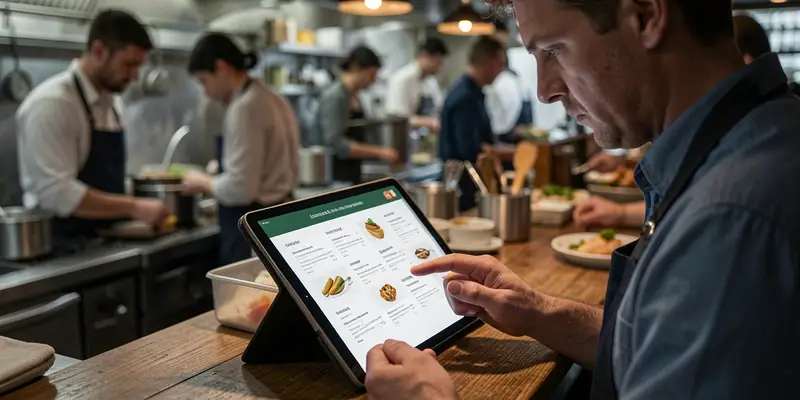
Menu engineering is the data-driven process of designing menus to maximize high-margin item sales. By combining local search demand data with psychological design patterns and tight inventory constraints, operators can significantly increase repeat orders and bottom-line profit.
Leveraging Menu Market Fit and Local Search Arbitrage
Most independent operators build menus based on gut feeling or personal preference. This is a fast track to bankruptcy. The most successful units—those clearing $200,000 in annual profit—utilize what is known as Menu Market Fit. This means ensuring your kitchen output aligns precisely with what local diners are actively searching for but haven’t found a “home” restaurant for yet. If you are operating a taqueria in a specific suburb, you need to know exactly what the local demand looks like before you ever fire up the grill.
Google Keyword Planner is the primary tool for this extraction. By filtering for your specific city and cuisine keywords, you can identify “virgin” market segments. If five hundred people in your immediate radius are searching for “best birria tacos” every month and no local competitor has a dedicated landing page or a prominent menu section for it, that is your entry point. When a customer searches for a specific dish rather than a general restaurant type, they are expressing a specific craving. If you position your brand as the definitive source for that specific craving, you bypass the general “where should we eat?” noise and become the default destination.
Once you identify these high-demand items, you must build digital infrastructure around them. Create specific pages on your website or sections in your digital menu that highlight these dishes. Using a platform like QR Menu Maker allows you to instantly update your digital menu to reflect these findings without waiting for a print cycle. If you see a spike in local search for “seasonal roast” or “craft coffee flights,” you can have those items live and searchable in seconds. This isn’t just about food; it’s about digital real estate and capturing intent at the moment of search.
The Financial X-Ray: Categorizing Stars and Plow Horses
To engineer a menu for profit, you must perform a financial x-ray of every single item. This requires a spreadsheet where you track food cost, sale price, and volume sold over a rolling 30-day period. Without these numbers, you are flying blind. Once the data is populated, every item falls into one of four buckets: Stars, Plow Horses, Puzzles, or Duds. This classification dictates your entire operational strategy.
Stars are your high-popularity, high-profit items. These are the workhorses of your bottom line and the reason guests return. You do not touch the recipes for Stars, and you never hide them. Plow Horses, however, are the dangerous trap of the restaurant world. These are items that sell in high volume but carry thin margins. If your kitchen is slammed on a Friday night and 60% of the tickets are Plow Horses, you are working harder for less money. You must either tweak the portion size, find a cheaper supplier for the primary protein, or pair them with high-margin sides to balance the contribution margin.
Puzzles are the items that have great margins but nobody is ordering. Usually, the issue is visibility or naming. A Puzzle might just need a better description or a more prominent spot on the digital menu. Duds are the items that are neither popular nor profitable. They waste shelf space, complicate prep, and clutter the guest’s decision-making process. In almost every case, Duds should be deleted immediately. If you are sentimental about a Dud, you must radically rework the recipe to lower the cost and move it into the Puzzle or Star category.
Tactical Constraints: The Rule of 6-8-4
Decision fatigue is the enemy of the high-performing menu. When a guest is presented with thirty different entrees, their brain defaults to the cheapest or most familiar option, often bypassing your high-margin Stars. Data shows that the ideal menu size for maximum kitchen efficiency and guest satisfaction is much smaller than most operators realize. You should aim for exactly six appetizers, eight entrees, and four desserts.
For beverages, the sweet spot is eight options, excluding basic soft drinks and coffee. This should include four signature cocktails or mocktails. Signature drinks are critical because you can charge a premium for a proprietary mix that often has a lower pour cost than a standard call drink. By limiting your entree count to eight, you reduce inventory spoilage and allow your line cooks to master the preparation of every single dish. A focused kitchen is a fast kitchen, and speed of service directly impacts table turnover and labor costs.
This constraint also simplifies inventory management. Instead of carrying unique ingredients for twenty different dishes, you can cross-utilize high-quality ingredients across a smaller, more potent selection. If you run a bakery or cafe, this might mean a daily pastry rotation or a fresh bake schedule that focuses on four standout items rather than twelve mediocre ones. When you use QR Menu Maker to manage these rotations, you can toggle items on or off based on “fresh bake” availability, ensuring guests never try to order a sold-out item, which is a major point of friction in the dining experience.
Spatial Engineering and the Z-Pattern Eye-Tracking
The way a human eye moves across a page—or a screen—is predictable. Research into eye-tracking shows that diners typically follow a “Z” pattern: starting at the top left, moving to the top right, scanning diagonally to the bottom left, and finishing at the bottom right. This is your prime real estate. If you place your Duds in the top right corner, you are literally throwing away money. Your Stars and your Puzzles must occupy these high-visibility zones.
Visual cues are the second layer of spatial engineering. By using boxes, bold text, or professional photography, you can pull the guest’s eye toward specific items. However, these tools must be used sparingly. If you highlight everything, you highlight nothing. The gold standard is to feature only one item per page. This singular focus can drive a 30% increase in the sales of that specific dish. For digital menus, this means using a clean, AI-powered design that doesn’t overwhelm the user on a mobile screen.
If you have a Puzzle—an item that is highly profitable but slow to sell—this is where you apply your visual cues. Put a box around it. Move it to the top right. Give it a high-resolution photo. You are effectively using design to guide the guest toward a choice that benefits your bottom line while still providing a high-quality meal. Conversely, move your Plow Horses to less prominent areas. They will still be found by the regulars who love them, but they won’t be the first thing a new guest sees.
The Linguistics of Narrative Selling and Price Anchoring
A “grilled chicken sandwich” is a commodity. A “tender, locally sourced chicken breast, flame-grilled and served on a toasted artisan bun with crisp hydroponic lettuce” is an experience. The language you use in your descriptions doesn’t just sell the food; it actually changes the perceived taste. Studies indicate that guests rate dishes with descriptive, origin-based names as tasting better than those with generic names. Terms like “housemade,” “fresh-squeezed,” or “seasonal roast” justify a higher price point and increase the guest’s willingness to pay.
Pricing presentation is equally psychological. The dollar sign ($) is a “pain point” symbol; it reminds the guest they are spending money. Premium restaurants have long known that dropping the dollar sign and simply placing the number at the end of a description reduces price sensitivity. For example, instead of “Paloma… $12,” you write the description of the high-end tequila and fresh grapefruit, ending simply with “12.” This forces the guest to evaluate the value of the ingredients before they see the cost.
Integrating this into a digital format is where QR Menu Maker excels. Traditional print menus are static; if your egg supplier doubles their prices overnight, your “Star” becomes a “Plow Horse” and you’re stuck with old pricing or ugly hand-written corrections. With a digital platform, you can update that “12” to a “14” across your entire system in seconds. You can also rework descriptions to highlight new “locally sourced” partnerships as they happen, keeping the menu fresh and the margins protected against inflation.
Continuous Optimization and the Quarterly Pivot
Menu engineering is not a one-time project; it is a quarterly discipline. Food costs are volatile. Consumer trends shift rapidly. What was a Star in Q1 might be a Dud by Q3 because of a shift in the price of beef or a new dietary trend sweeping the city. You should perform a full financial x-ray of your menu every three months. Ask yourself: Are the Stars still shining? Have any Puzzles become Duds?
Your staff is the final piece of the optimization puzzle. They are your front-line sales force. Once you identify your Stars and Puzzles, you must train your servers to recommend them. A server should never say “everything is good.” They should say, “Our grilled salmon is a guest favorite; it’s fresh-caught and pairs perfectly with our house white.” By giving them the data on what the “Stars” are, you empower them to drive the guest toward the most profitable and satisfying experience.
Finally, use your POS (Point of Sale) data to find “combo” opportunities. If people frequently order a specific appetizer with a certain entree, create a digital “meal upgrade” or combo deal. This increases the average check size and simplifies the ordering process. In the age of dark kitchens and fast-paced diners, the ability to pivot your menu in real-time based on data—rather than waiting for a printer—is the difference between a struggling cafe and a high-profit restaurant empire.
Frequently Asked Questions
How often should I update my food costs in my menu engineering spreadsheet?
You should review your food costs at least once per quarter (every 3 months). However, during periods of high inflation or supply chain volatility, a monthly check is recommended to ensure your Stars haven't accidentally become Plow Horses due to rising ingredient prices.
What should I do with a 'Plow Horse' item that is too popular to remove?
Do not remove popular items that guests love. Instead, focus on 'margin repair.' Tweak the recipe to use more cost-effective ingredients, slightly reduce the portion size, or increase the price while adding a more 'premium' description to justify the cost. You can also move it to a less prominent spot on the menu.
Why should I remove the dollar sign from my menu pricing?
The dollar sign acts as a psychological trigger that reminds guests of the 'pain' of spending. By removing it and placing the number at the end of the description, you encourage guests to focus on the value and quality of the dish rather than shopping by price.
How many items are too many for a restaurant menu?
For maximum efficiency and profit, aim for 6 appetizers, 8 entrees, 8 beverages, and 4 desserts. Excessive choices lead to decision fatigue for the guest and increased inventory waste and labor costs for the kitchen.