The $90,000 Math Error: Why Delayed Menu Pricing Adjustments Are Killing Your Bottom Line

Delaying menu price updates during inflationary periods can cost an independent operator upwards of $90,000 in annual profit. Leveraging real-time [digital menu](/features) tools is the only way to protect margins without incurring massive reprinting costs.
The Fatal Error of Tactical Hesitation in Menu Management
Independent operators often pride themselves on their gut instincts, but gut feelings are a liability when commodity prices shift by double digits in a single quarter. There is a specific, recurring trap that catches even experienced multi-unit owners: the “wait-and-see” approach. When meat or dairy prices spike, the immediate reaction is often to absorb the cost temporarily to avoid the friction and expense of reprinting physical menus. This is not a strategy; it is a mathematical surrender.
Think about the friction involved in a traditional menu update. You have to find the original design files, coordinate with a graphic designer, wait for proofs, and then pay a premium for rush printing. For a mid-sized operation, reprinting a full multi-page menu across forty or fifty tables can easily cost $2,000 or more. Facing that upfront bill, many owners decide to “ride it out,” hoping prices will normalize. This hesitation is where the bleed begins.
If your food cost percentage is calculated at 30% and a primary protein like pork or beef jumps by 30%, your margin on those plates evaporates instantly. If you wait a year to adjust, as many do, that $2,000 you “saved” by not reprinting can manifest as $90,000 in lost net profit. In an industry where 5% to 10% is a standard healthy margin, a $90,000 loss is often the difference between staying open and shuttering the doors. You are effectively paying your customers to eat your food.
The Commodity Volatility Reality: Beef, Seafood, and Poultry
The current market is not experiencing a standard inflationary crawl; it is facing a series of aggressive, localized shocks. Beef prices have recently surged by 32% due to a combination of labor shortages in processing plants and systemic disruptions like cyber attacks on major suppliers. When one-fifth of the national beef supply is impacted, the ripples hit the independent diner’s steak frites and the burger joint’s food cost overnight.
Seafood is seeing similar volatility, with prices up 25%. This isn’t just a matter of “market price” items. It’s driven by poor catch rates, increased global demand, and the same labor vacuum that is strangling the rest of the supply chain. If your menu features salmon or shrimp as a staple, your cost-per-plate has shifted so drastically that your previous price points are likely obsolete.
Poultry, often the “safe” protein for budget-conscious menus, has climbed 13%. When the baseline cost of wings and breasts rises, the “combo deal” that used to be your highest-margin item suddenly becomes a liability. These are not short-term blips. Indicators suggest these conditions will persist for months, if not longer. If you are still using a menu printed six months ago, you are operating on old data in a new, more expensive world.
The Hidden Sabotage: Non-Protein Inflation and Disposables
While the center-of-the-plate items get the headlines, the “quiet” inflation in the pantry is equally dangerous. Shortening and cooking oils have increased by 11% due to refining capacity constraints. For a fast-food outlet or a food truck, the cost of the fryer is a massive overhead component. If you aren’t tracking the per-gallon cost of oil and adjusting your side-item pricing accordingly, you are losing money on every order of fries.
Dairy, bakery goods, and raw commodities like flour and sugar are also trending upward. These items are the foundation of bakeries and cafes. A twenty-cent increase in the cost of a pastry’s butter and flour might seem negligible until you multiply it by five hundred units a week. Over a year, that unrecovered cost becomes a five-figure hole in your P&L.
Then there is the matter of disposables. For dark kitchens and fast-casual spots, the cost of packaging is non-negotiable. To-go containers, napkins, and bags have seen significant price hikes. If your “Meal Upgrade” price hasn’t moved to reflect the fact that the box it comes in costs 15% more than it did last year, you are subsidizing your guests’ convenience at the expense of your payroll or rent.
Math Over Emotion: Deciding When to Pull the Trigger on Price Hikes
Restaurant owners often fear that raising prices will alienate regulars. This fear leads to emotional decision-making rather than data-driven adjustments. You must look at the math side of the business with cold objectivity. Your bookkeeper and your P&L statement do not care about your fear of a negative Yelp review; they only care about the solvency of the business.
When you see a 32% spike in beef, you must raise your prices immediately. There is no “waiting for things to settle.” The “wait-and-see” approach is a luxury that tight-margin businesses cannot afford. Every day you wait is a day of unrecoverable lost revenue. The guest understands that the price of eggs and meat at the grocery store has gone up; they will understand why it has gone up at your restaurant as well.
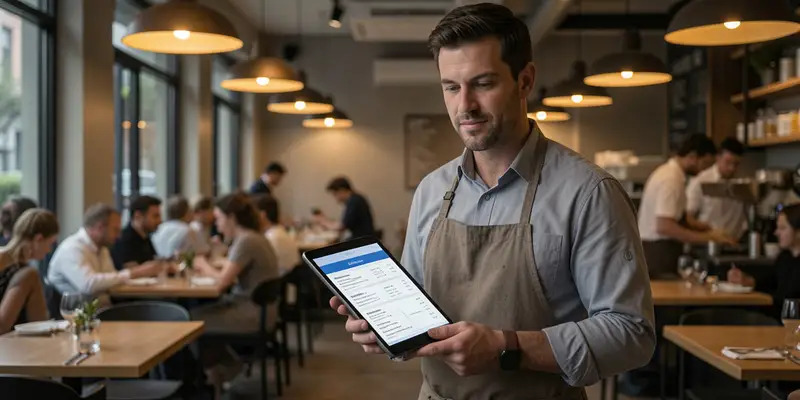
Modern tools like QR Menu Maker eliminate the primary excuse for price hesitation: the cost of reprinting. By using an AI-powered platform to digitize your menu, you can adjust the price of a ribeye or a coffee flight in seconds. Instead of a $2,000 print bill, you have a $9.99/month Pro subscription that allows for real-time updates. This level of agility transforms price adjustments from a major “event” into a routine weekly maintenance task.
Menu Engineering: Controlling the Guest’s Path to Purchase
Inflationary periods require more than just raising prices; they require strategic menu engineering. This is the art of using design and psychology to guide guests toward the items that are most profitable for you right now. If beef is skyrocketing but your pasta costs are stable, your menu should visually highlight your “Signature Lasagna” or “House-made Fettuccine.”
The goal is to influence the purchasing decision at the point of sale. Traditional paper menus are static—they cannot react to a sudden shortage of scallops or a temporary price drop in poultry. A digital menu, however, allows you to change your “Chef’s Specials” or “Daily Pours” instantly. You can move high-margin items to the “Golden Triangle” of the menu (the area the eye hits first) without needing a designer.
For breweries and taprooms, this is particularly relevant for rotating kegs and seasonal pours. If a specific hop variety becomes too expensive, you change the tap list immediately. For cafes, it means updating the fresh bake schedule or the seasonal roast in real-time. This ensures that you are never selling out of a low-margin item while your high-margin inventory sits in the walk-in.
Digital Agility: Eliminating the $2,000 Reprint Barrier
The traditional restaurant workflow is slow. The digital workflow is instantaneous. QR Menu Maker’s AI-powered menu scanning allows you to take a photo of your existing physical menu and convert it into a web-ready digital format in seconds. This isn’t just about “going paperless”; it’s about operational defense.
By utilizing QR code generation, guests access your menu via their own devices. This removes the “hygiene” friction of physical menus and, more importantly, ensures they are always looking at current pricing. When you update a price in your dashboard—whether for a “Crowler” at a brewery or a “Combo Deal” at a dark kitchen—that change is live for the next person who scans the code.
For $49.99 a year, an operator can effectively save $2,000 in printing costs and potentially $90,000 in lost profits. The ROI of digital agility in an inflationary market is massive. You can test new pricing strategies on a Tuesday and, if you see a significant drop in volume, adjust them by Wednesday. You cannot do that with ink and paper.
Strategic Sourcing and the Weekly Vendor Combat
You must have candid conversations with your sellers. Use the reports you receive on a weekly basis—like a “Farmer’s Report”—to track upcoming commodity shifts before they hit your invoices. If your vendor tells you that poultry is about to spike because of a feed shortage, that is your signal to update your digital menu before the new shipment arrives.
Don’t just be a passive buyer. Ask your food fanatic chefs or consultants for pricing strategies that “engineer out” high-cost items. If a specific cut of beef is becoming unsustainable, work with your kitchen to find a secondary cut that can be prepared with the same quality but a lower cost-of-goods-sold (COGS).
This proactive approach requires a “live” menu. If you are tied to a physical print run, you are stuck with your current items for months. If you are using a digital platform like QR Menu Maker, you can swap out a “New York Strip” for a “Hanger Steak” in thirty seconds, complete with a new description and price point. This allows you to stay profitable without sacrificing the guest experience.
Building a Recession-Proof Operational Foundation
Operating a restaurant in 2026 requires a level of technical sophistication that was optional ten years ago. You must be as comfortable with your analytics dashboard as you are with your line prep. Knowing your math—down to the penny—is the only way to survive when margins are squeezed by global forces beyond your control.
Use the insights and analytics from your digital menu to see what guests are actually clicking on. If your “Meal Upgrades” aren’t getting traction, change the wording or the price on the fly. This is not “set it and forget it” business management. This is active, hourly oversight of your revenue streams.
The commitment to “making it” as an operator means doing the hard work of monitoring market conditions and making early decisions. Do not wait for a global shortage to force your hand. Use the tools available today—AI-powered digitization, real-time web menus, and deep-dive analytics—to ensure your bottom line remains healthy, regardless of what happens to the price of beef or oil.
FAQ
How can I justify raising prices to my regulars without losing their business?
Transparency and value perception are key. Use your digital menu to highlight the quality and origin of your ingredients. Most guests are aware of inflation at the grocery store; they will accept a price increase if the quality of service and food remains high. Use the “AI-powered menu updates” to make small, incremental changes rather than one massive, shocking price jump.
What is the fastest way to digitize a large, multi-page physical menu?
The fastest method is using an AI-powered scanner like the one in QR Menu Maker. Instead of manually typing in every item, price, and description, you take a photo of the physical page. The AI digitizes the text, allowing you to quickly organize it into categories, add branding, and publish it as a shareable web link.
How often should I be checking my food costs and updating my menu?
In a volatile market, you should review your high-volume commodity prices weekly using vendor reports. If your COGS on a top-selling item shifts by more than 3-5%, you should consider an immediate digital update to your menu pricing to maintain your margins.
Is a digital menu actually cheaper than printing paper menus?
Yes, by a significant margin. A Pro subscription to a digital menu platform like QR Menu Maker costs $9.99/month or $49.99/year. A single professional print run for a standard restaurant can cost between $500 and $2,000 depending on volume and design complexity. The digital option pays for itself in a single update.
Frequently Asked Questions
How can I justify raising prices to my regulars without losing their business?
Transparency and value perception are key. Use your digital menu to highlight the quality and origin of your ingredients. Most guests are aware of inflation at the grocery store; they will accept a price increase if the quality of service and food remains high.
What is the fastest way to digitize a large, multi-page physical menu?
The fastest method is using an AI-powered scanner. Instead of manually typing, you take a photo of the physical page and the AI digitizes the text, allowing you to organize and publish it as a web link instantly.
How often should I be checking my food costs and updating my menu?
In a volatile market, you should review your high-volume commodity prices weekly. If your COGS shifts by more than 3-5%, consider an immediate digital update to maintain margins.
Is a digital menu actually cheaper than printing paper menus?
Yes. A digital menu platform costs around $49.99/year, whereas a single professional print run can cost $500 to $2,000. [Digital menus](/features) eliminate the cost of reprinting every time prices change.