Surviving the Staffing Crisis and Securing Your Share of the $28 Billion Grant Relief

The restaurant industry faces a critical labor shortage where even $60,000 management roles remain unfilled as workers migrate to other sectors. Operators must leverage upcoming federal grants and digital efficiencies to maintain service levels while understaffed.
The $60,000 Vacuum: Why High-Paid Management Roles Stay Empty
The current labor market for independent restaurants is not just a shortage; it is a structural reorganization of how people value their time. We are seeing kitchen management positions—roles that pay upwards of $60,000 a year—sitting vacant for weeks or even months. For an independent operator, a vacant head chef or kitchen manager role is a slow-motion car crash. It means the owner is likely the one standing over the flat top, pulling 14-hour shifts, and neglecting the high-level financial oversight that keeps a business solvent. When these high-paying slots go unfilled, it signals that the problem isn’t just about “entry-level” wages; it’s about a fundamental shift in the lifestyle expectations of the hospitality workforce.
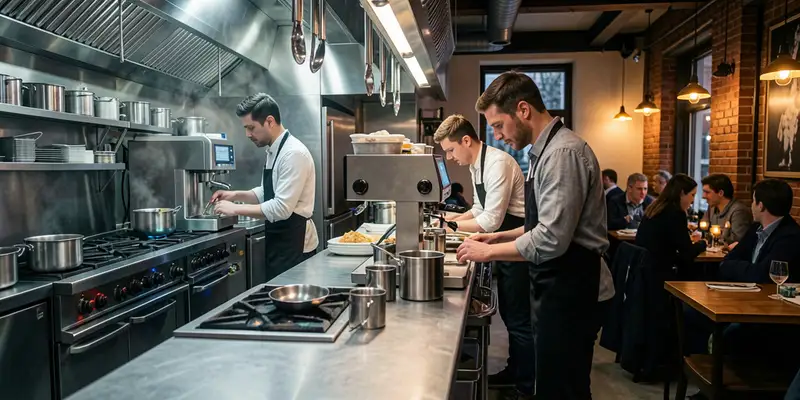
The friction of a busy shift has changed. In a standard operational environment, a kitchen manager ensures the line is prepped, the food cost is controlled, and the ticket times stay under twelve minutes. Without that leadership, the noise of the kitchen becomes chaotic. Orders get backed up, table turnover slows down, and the physical toll on the remaining staff leads to a secondary wave of burnout. You cannot simply throw money at this problem when the candidates aren’t even walking through the door.
We are seeing a reality where the “back to school” timeline for parents is dictating the operational capacity of full-service restaurants. Many workers are not sitting at home purely out of a lack of desire to work; they are managing household logistics that were shattered during the shutdown. Until child care and school schedules stabilize, that $60,000 salary is competing with the literal impossibility of being in two places at once. For the operator, this means you need to stop waiting for the “perfect” manager and start building systems that allow a less-experienced crew to function without constant oversight.
The Skill Migration: Losing Talent to Competitive Industries
When restaurants were forced to shutter their doors, the industry didn’t just lose bodies; it lost a collective century of institutional knowledge. Bartenders and floor managers are not just “service workers.” They are high-level negotiators, logistics experts, and customer service specialists. During the downtime, other industries—logistics, real estate, and corporate sales—realized the value of a former restaurant manager. These sectors offer something the Friday night rush never could: weekends off, health insurance, and a predictable 9-to-5 schedule.
The “twofold” problem described by industry associations is that the exodus was both forced and voluntary. Those who took their management skills elsewhere are not coming back for a $15 hourly wage plus tips. They have found that they can make similar or better money without the physical toll of being on their feet for ten miles a shift. This leaves independent restaurants competing not just with the diner down the street, but with every corporate office in the city.
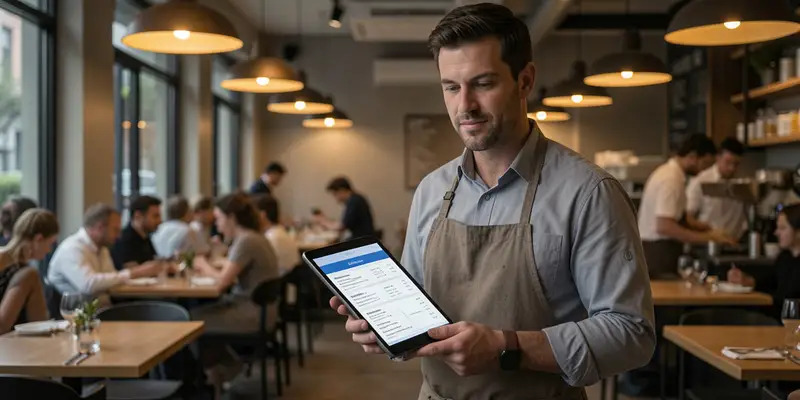
To combat this, operators have to rethink the “why” of their employment offer. If you can’t beat the 9-to-5 schedule, you have to maximize the efficiency of the hours your staff is on the clock. Reducing the “busy work” is the only way to retain the talent that hasn’t left yet. If a server is spending forty minutes a shift updating physical menu boards or reprinting paper inserts because of price fluctuations, that is forty minutes they aren’t on the floor generating tips. Transitioning to a digital-first approach using tools like QR Menu Maker allows you to digitize your menu in seconds, freeing your skeleton crew to focus on the guests rather than manual data entry.
The Economics of Staying Home: Unemployment and Household Strategy
The current economic reality is that for a significant portion of the workforce, staying home is a calculated financial decision rather than a lack of work ethic. Enhanced federal unemployment benefits, while often lower than a full-time service wage, provide a level of stability that the volatile tip-based economy cannot match. For a parent, the delta between a $600 weekly benefit and an $800 weekly paycheck is often completely consumed by the cost of childcare or transportation.
When you factor in the “wait until school is back” mentality, we see that many workers are simply timing their re-entry into the market for when their overhead costs drop. This creates a massive gap for the summer season—usually the highest-earning period for restaurants. If you are a restaurant owner in a high-traffic area, you are likely looking at a patio full of customers and a kitchen that can only handle 50% capacity.
This is where the “first-come, first-served” mentality must extend to your operations. You cannot wait for the labor market to “normalize.” It may never return to the 2019 baseline. Instead, you must audit every second of labor. If your staff is spending time explaining what is out of stock, you are losing money. By using the real-time update features of a platform like QR Menu Maker, you can mark items as unavailable the second they run out. This prevents the “I’ll go check with the kitchen” dance that wastes five minutes per table—a luxury an understaffed restaurant simply doesn’t have.
Operational Survival: The Reality of Restricted Hours
We are seeing a disturbing trend of “partial reopenings.” Established restaurants that have survived for decades are now closing on Mondays and Tuesdays or cutting their dinner service short because they simply do not have the bodies to man the stations. Every hour your doors are closed is an hour where your fixed costs—rent, insurance, utilities—are eating your remaining capital. It is a death by a thousand cuts.
Being understaffed forces a restaurant to make a choice: provide mediocre service at full capacity or provide excellent service at half capacity. Most experienced operators are choosing the latter, but the financial strain is immense. Holding off on a full reopening is a defensive move, but it doesn’t pay the bills. The industry is currently in a holding pattern, waiting for a liquidity injection that can bridge the gap between “survival mode” and “growth mode.”
During these restricted hours, your digital presence is your only constant. If a customer drives to your location only to find you’ve closed early due to staffing, and your online menu still shows a full list of items you can’t actually prep, you’ve lost that customer for good. Real-time menu management isn’t just a convenience; it is a critical communication tool for an unstable operational environment. Using a shareable web link for your digital menu ensures that whatever you are capable of serving right now is what the customer sees before they even park their car.
Securing the $28 Billion: The Restaurant Revitalization Grant
The announcement of $28 billion in grant funding is the single most important development for independent restaurants this year. Unlike the PPP loans, which were often confusing and difficult to get forgiven, these are direct grants intended to make up for COVID-19 losses. With a maximum grant of $5 million per restaurant, the scale of this relief is unprecedented. However, the “first-come, first-served” nature of the application process means that the difference between staying open and shuttering forever could come down to a matter of hours.
Operators need to have their financial records ready the moment the application portal opens. This includes detailed loss statements from the past two years. The June timeline for distribution means that the money will hopefully arrive just as the summer rush hits its peak, providing the capital needed to hike wages or offer signing bonuses to fill those $60,000 management slots.
This capital should not just be used to patch holes. It should be used to modernize. If you get a grant, your first priority is labor, but your second priority must be technology that reduces your future labor dependency. Moving to a Pro plan on QR Menu Maker for $49.99/year is a negligible expense that protects you from the labor-heavy process of manual menu management. When you are fighting for your life in a first-come, first-served grant environment, you need to be just as aggressive about your internal efficiencies.
Strategic Implementation of Digital Menus to Combat Labor Shortages
When you are short-staffed, every “touchpoint” is a potential failure. The traditional cycle of handing out a menu, waiting for the guest to read it, returning to take a drink order, and then returning again to take a food order requires a high level of FOH labor. Digital menus via QR codes collapse this cycle. By allowing guests to scan a code the moment they sit down, you provide them with instant access to the menu, including photos and detailed descriptions that an overworked server might forget to mention.
QR Menu Maker’s AI-powered scanning allows you to take your old, bloated physical menu and digitize it instantly. This is crucial for restaurants that are constantly changing their offerings based on what ingredients they can actually get and what staff they have available to cook. If your pastry chef quits, you need to remove the “Daily Pastry Rotation” from your menu immediately. You can’t wait for a printer to send back proofs.
Furthermore, the insights and analytics dashboard provided by these platforms gives you a technical deep-dive into what is actually selling. When you are understaffed, you should prune your menu to the most high-margin, low-effort items. If the data shows that your “Combo deals” are the most popular and easiest for a skeleton kitchen crew to prep, you should highlight those. A digital menu isn’t just a PDF on a phone; it’s a dynamic tool for steering customer behavior toward the path of least resistance for your tired staff.
Building Resilience for the Post-Pandemic “Normal”
God willing, the period of COVID-19 will eventually end, but the lessons of the staffing crisis will remain. The restaurants that survive will be those that didn’t just wait for the workers to come back, but those that adapted their business model to require less manual labor. This doesn’t mean replacing humans with robots; it means using AI and digital tools to handle the “data” of the restaurant so the humans can handle the “hospitality.”
Independent restaurants are the backbone of the economy, but they are also the most vulnerable to shifts in the labor market. The $28 billion grant is a lifeline, but your long-term survival depends on your ability to manage your menu, your pricing, and your staff’s time with surgical precision. Whether you are a brewery managing a rotating tap list or a dark kitchen focused on quick-pick menus, the goal is the same: stay alive, stay open, and stay efficient.
By the time we reach the end of this summer, the gap between the “analog” restaurants and the “digital-first” restaurants will be a canyon. Those using tools like QR Menu Maker to manage real-time updates and customer insights will have the data they need to navigate the next crisis. Those still waiting for a manager to show up for a $60,000 role while they hand-scrub plastic menus will likely find themselves on the wrong side of the “closed” sign.
Frequently Asked Questions
How much grant money is available for my restaurant?
The federal government has allocated $28 billion in grants for restaurants. Each individual establishment can apply for a maximum grant of up to $5 million to cover losses incurred during the pandemic.
What is the primary reason for the current staffing shortage?
The shortage is twofold: many experienced workers moved their management and customer service skills to other industries during shutdowns, while others are staying home due to childcare needs or because unemployment benefits currently provide enough stability to wait for schools to reopen fully.
How can I manage my restaurant if I can't fill management positions?
Operators are being forced to reduce hours, close on certain days, or delay full reopenings. Implementing digital efficiencies, such as AI-powered menu management and QR codes, can help a skeleton crew handle more guests by reducing manual tasks like menu updates and order explanations.
When will the grant money be distributed?
The timeline suggests that money could be in the hands of restaurant owners as soon as June, provided they apply early, as the funds are distributed on a first-come, first-served basis.