The Pricing Power Playbook: Why Independent Restaurants Must Adapt or Close

Inflation is no longer a temporary hurdle; it is a structural shift requiring immediate pricing flexibility and operational overhaul. Restaurants failing to leverage real-time menu adjustments are effectively subsidizing their customers' meals at the cost of their own solvency.
The Brutal Reality of 60% Beef Hikes and the Fat-Oil Crisis
The back-of-house reality is currently a nightmare of fluctuating invoices. When commodity prices for beef jump nearly 60 percent, it isn’t just a “headwind”—it is a catastrophic failure of the traditional fixed-cost model. For an independent steakhouse or a burger joint, a 60% increase in protein costs wipes out the entire bottom line of a dish if the menu prices remain static. Most operators are still looking at their food costs once a month, but in this environment, that is a recipe for bankruptcy.
Fats and oils are up 50 percent, which hits the very foundation of the kitchen. Every fryer, every sauté station, and every salad dressing is suddenly twice as expensive to produce. If you are running a high-volume fish and chips shop or a wings spot, your “invisible” costs—the stuff you use to actually cook the food—are bleeding you dry. You cannot wait for a quarterly menu review to address these spikes. You need to be able to pivot the moment that Sysco or US Foods truck drops the ramp.
The friction in the kitchen becomes palpable when these costs rise. Chefs start trying to stretch ingredients, portion sizes get scrutinized under a microscope, and morale drops as the pressure to maintain margins increases. This isn’t just about the price of the meat; it’s about the entire operational flow. When your primary inputs are this volatile, your menu cannot be a static piece of paper. It has to be a living, breathing document that reflects the reality of your inventory costs.
Decoding Pricing Power: Why Chipotle Succeeds While Others Stumble
Pricing power is the ability to raise your rates without seeing a significant drop-off in customer volume. Large players like Chipotle and McDonald’s are proving that the consumer is willing to pay more, provided the value proposition remains clear. McDonald’s saw no consumer pullback despite a 6 percent price hike. This suggests that the “fear” many independent operators have about raising prices by 50 cents or a dollar is largely internal and not reflected in market behavior.
If you are a full-service restaurant (FSR), your pricing power is tied to the experience, but your margins are being attacked by both commodities and labor. Unlike the quick-service giants, your labor costs are higher because of the “sit-down” requirement. You have servers, bussers, and hosts to pay, and their wages are climbing alongside the price of beef. When margins are volatile, as seen with brands like Denny’s, it indicates a failure to align the menu price with the operational cost in real-time.
To maintain pricing power, you have to be surgical. You don’t just raise prices across the board and hope for the best. You use insights and analytics to see which items are high-margin/high-popularity and which are just taking up space. If a specific “Seasonal pour” or “Rotating keg” at your taproom is suddenly costing you 40% more to acquire, the price on the board needs to change before the first pint is poured. The big guys do this with sophisticated software; independent shops need to do it with digital agility.
The Labor Shortage Trap and the Multi-Quarter Recovery
Staffing is not a problem that will be solved by the next hiring fair. We are looking at a multi-quarter, perhaps multi-year, struggle to return to “normal” staffing levels. For a casual dining spot, labor shortages don’t just mean “we’re hiring”—it means slower table turnover, higher ticket times, and frustrated guests who won’t return. When a manager is forced to wash dishes because the steward didn’t show up, the high-level operational oversight required to manage 60% beef inflation disappears.
The volatility in margins is directly linked to this labor instability. If you are understaffed, you are likely paying overtime to your core crew, which further eats into the slim profits you have left after paying for that 50% increase in frying oil. It’s a vicious cycle. The only way to break it is to remove as much manual labor from the front-of-house as possible. Every minute a server spends explaining that “we are out of the ribeye” or “the price of the wings went up” is a minute wasted.
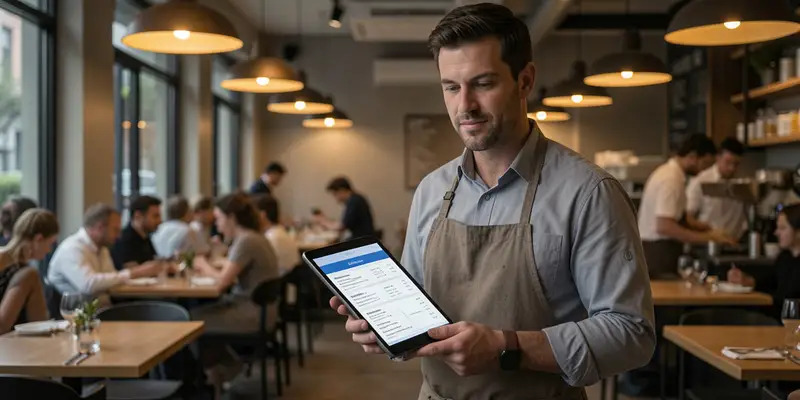
By digitizing the menu, you offload the “information” work to the customer’s device. Instead of a server having to update guests on “Daily pastry rotations” or “Fresh bake schedules” in a cafe setting, the digital menu handles it. This reduces the cognitive load on your remaining staff, allowing them to focus on service rather than menu management. In an era where labor is your most expensive and scarcest resource, wasting it on reading prices out loud is operational malpractice.
The Shift to “Grab and Go” and the Death of the Mid-Tier Casual
Consumers are gravitating toward quicker, more efficient experiences. This isn’t just about the price point; it’s about the value of time. The casual dining sector, often associated with a “sit-down experience,” is being squeezed by QSR (Quick Service Restaurant) names that offer a better price and a faster “grab and go” flow. If your independent restaurant requires a 15-minute wait just to see a menu, you are already losing to the fast-casual spot down the street.
The “grab and go” model works because it is frictionless. Digital menus and QR code access allow a customer to see the “Quick-pick menu,” order, and pay without waiting for a physical piece of laminated paper. This is why the stock performance of companies with pricing power and digital efficiency—like Yum Brands—is up double digits, while casual laggards like Brinker are struggling. The market is telling us exactly what it wants: speed and transparency.
For a small business or a food truck, this shift is actually an opportunity. You don’t have the overhead of a massive casual dining floor. You can lean into the “Modern Restaurant” aesthetic by making your menu instantly accessible via a web link. This levels the playing field, allowing a single food truck to have the same real-time pricing agility as a global chain like McDonald’s.
The 20-Year Sign of the Times: Why Legacy Won’t Save You
The story of a 20-year-old Italian restaurant closing its doors is a warning to every operator. Longevity is not a shield against inflation. In fact, legacy restaurants are often the most at risk because they are wedded to “the way we’ve always done it.” They have physical menus that were printed in 2019, they have staff that have been there forever but are now priced out of the market, and they have a customer base that expects 2019 prices.
When a local staple closes after two decades, it’s usually because the margin volatility finally caught up with them. They couldn’t flex their pricing power because the cost of reprinting menus and “re-educating” customers was too high. They were stuck in a “volatile” state for too many quarters, and eventually, the cash ran out. This is the “sign of the times” that every independent owner needs to take seriously.
The solution is a radical shift toward digital management. If you can update your “Combo deals” or “Meal upgrades” in seconds, you can react to the market instead of being buried by it. Professional platforms like QR Menu Maker are designed specifically for this restaurant workflow. Unlike generic tools, they allow for the instant digitization of physical menus. If you’re that legacy Italian spot, you can scan your existing menu and have a digital, updateable version live before the dinner rush. This isn’t just a “tech upgrade”; it’s an insurance policy against closing your doors.
Operational Agility: Using AI and Real-Time Data to Fight Back
In a world where fats and oils are up 50%, you need to be an analyst as much as a chef. Using AI-powered menu scanning allows you to digitize your offerings instantly. But the real value is in the “Real-time menu updates.” If you see a “Rotating keg” is running low or the cost of your “Seasonal roast” just spiked, you need to be able to change that price on the fly across all platforms—web, iOS, and Android.
Independent restaurants, breweries, and taprooms can no longer afford to be “static.” You need to look at your insights and analytics dashboard every morning. Which items are being scanned? Which items are being ignored? If people are scanning your “Coffee flight” but not ordering it, perhaps the price is too high or the description isn’t hitting. A digital menu allows you to A/B test your offerings in a way that physical menus never could.
Furthermore, the “PDF to web menu” conversion is a bridge for those who are currently stuck in the old way of doing things. It takes the existing menu and makes it searchable, shareable, and, most importantly, editable. You can maintain your “Bistro aesthetic” with customizable themes and color branding while gaining the technical advantages of a dark kitchen or a fast-food outlet. This is how you protect your margins and stay positioned to handle rising costs.
Technical FAQ: Managing the Margin Squeeze
How do I handle a 60% spike in a core protein without losing customers?
You must implement dynamic pricing. Instead of a flat increase, use “Market Price” or “Daily Specials” on your digital menu. This allows you to adjust the price of high-volatility items like beef or seasonal seafood daily based on your actual invoice cost, without reprinting physical materials.
What is the fastest way to update prices during a shift if I see a supply cost increase?
Use a real-time menu management platform. By using a digital menu via QR code, you can log into your dashboard on a phone or tablet and change the price of an item instantly. The change reflects immediately for every guest who scans the code, ensuring you don’t sell a single dish at a loss.
How can I reduce labor pressure during a “busy shift” when I’m understaffed?
Digitize the menu to remove the “order-taking” friction. When guests scan a QR code to view the menu, they have all the information (including “Kitchen prep time” and “Item availability”) at their fingertips. This reduces the number of trips a server makes to the table and prevents the “let me check with the kitchen” delay, which speeds up table turnover.
What should I do if my “Daily pastry rotation” or “Rotating kegs” change mid-day?
Use the “real-time updates” feature of your digital menu. Mark items as “Out of Stock” or change the description of the “Seasonal pour” in seconds. This prevents guest disappointment and ensures your staff doesn’t have to apologize for unavailable items during the rush.
Is it worth switching to digital menus if I run a “Full-service restaurant” with a classic vibe?
Yes, because profitability is the ultimate “vibe.” You can use customizable themes to ensure the digital menu matches your branding and aesthetic. You aren’t losing the “sit-down experience”; you are gaining the “pricing power” needed to ensure that experience still exists next year.
Frequently Asked Questions
How do I handle a 60% spike in a core protein without losing customers?
Implement dynamic pricing or 'Market Price' designations on your digital menu. This allows you to adjust prices daily based on invoice costs, ensuring you maintain margins without the cost of reprinting physical menus.
What is the fastest way to update prices during a shift?
Use a digital menu platform with real-time update capabilities. Changes made in the dashboard reflect instantly on the QR code-accessed menu, allowing for immediate price adjustments as costs fluctuate.
How can digital menus help with labor shortages?
By providing guests with instant access to item availability and pricing, you reduce the time servers spend on basic information delivery. This streamlines the service flow and allows a smaller staff to manage a larger floor effectively.